Children learn best when they are curious, active, and involved. Experiential learning gives kids the chance to explore the world around them through movement, creativity, and play. Instead of simply memorizing facts, children absorb information through real experiences that make learning meaningful.
Here are some common questions:
- What is hands-on learning? It’s an approach where children learn by doing rather than just listening or memorizing.
- Why is it effective? It engages multiple senses and parts of the brain, helping students retain information longer and understand concepts more deeply.
- What are some examples of hands-on learning activities? Science experiments, art projects, building models, gardening, cooking, and museum exhibits that invite touch and exploration.
- How can teachers include it in the classroom? By using project-based lessons and interactive materials that let students experiment, observe, and reflect.
- Can families encourage hands-on learning at home? Absolutely. Parents can foster learning through play, crafts, nature walks, and by asking open-ended questions that spark curiosity and exploration.
At the Staten Island Children’s Museum, every exhibit is built to help children engage with their surroundings. Through touch, play, and imagination, kids explore complex ideas in simple, joyful ways.
The Science Behind Hands-On Learning
When kids get to roll up their sleeves, explore, build, test, and tinker, something powerful happens. Research tells us that education through play and active, physical engagement really boosts how children learn. Here’s a breakdown of what the science says about experiential learning:
- It Activates the Brain: When learners move, touch, experiment, and engage, they activate multiple brain regions at once. This kind of physical interaction strengthens neural connections, making it easier for children to recall and apply what they’ve learned later.
- It Improves Retention: Research from the University of Nebraska-Lincoln shows that students who engaged in hands-on learning retained 50% more information than peers who learned through traditional lectures.
- It Builds Problem-Solving Skills: One study showed that elementary students using hands-on LEGO machines and mechanisms developed stronger problem-solving and communication skills.
- It Supports Early Development: When children experiment, build, and observe, they practice communication, sequencing, and reasoning skills that strengthen overall cognitive growth. These experiences also nurture curiosity and confidence, laying the foundation for lifelong learning.
When children explore with their hands, ask questions, test ideas, and reflect on what they did, they build a deeper understanding of complex concepts. Teachers can enhance this process with supplemental materials that bring lessons to life and make abstract ideas tangible.
Learning Through Play
Play-based learning turns curiosity into understanding. When children build with blocks, paint, or explore pretend scenarios, they’re developing essential developmental skills that shape their growth.
In addition to boosting cognitive skills, creative play also offers significant social and emotional benefits. Sharing materials and ideas during play teaches empathy and cooperation, while storytelling and imaginative games expand language and communication. Managing wins and losses in games also helps children regulate emotions, handle frustration, and build resilience.
Children’s museum exhibits offer the perfect environment to spark this kind of educational play, providing rich, interactive experiences that nurture development across all domains.
Exploring Art, Guided Play, and Workshops
Field trips to a local children’s museum open the door to discovery through hands-on creativity and interactive exploration. These activities nurture curiosity and imagination while supporting key developmental milestones. Here are some of the options to explore:
- Making Art: Activities such as mask-making, experimenting with color, and designing necklaces help children express individuality, strengthen fine motor skills, and build confidence through artistic exploration. Children can also display their creations in a community gallery, celebrating their work and fostering a sense of pride and connection.
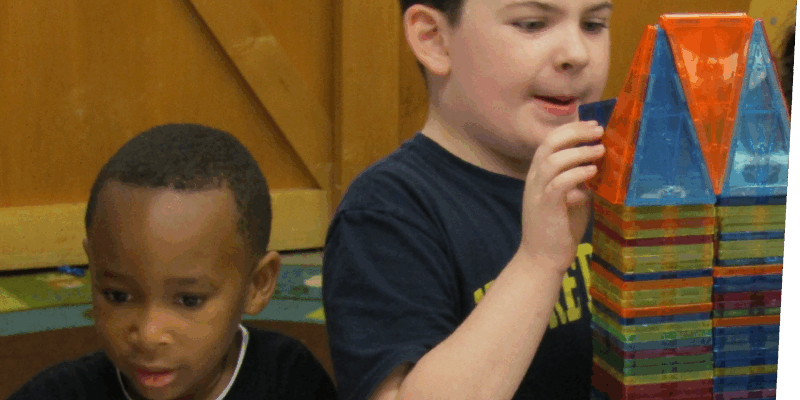
- Guided Play: Building with blocks, climbing ladders, and playing cooperative games teach balance, teamwork, and creative problem-solving in a fun, supportive environment.
- Workshops: Nature-based and STEM workshops encourage curiosity about the world, teaching observation, problem-solving, and collaboration through experiments and outdoor discovery.
Together, these creative learning experiences inspire children to see the world as a place of possibility. Whether in a museum or classroom, hands-on exploration helps imagination and knowledge grow side by side.
Inclusivity and Accessibility in Learning
Every child deserves access to high-quality education through play, no matter their background, ability, or learning style. Inclusive environments remove barriers and make sure all children feel welcome to explore and succeed. The principles of inclusive, hands-on learning include:
- Universal Design: Exhibits and classrooms are designed for all learners, including those with mobility or sensory differences.
- Multiple Pathways: Lessons are offered in visual, auditory, and tactile forms so each child can engage at their own pace.
- Collaborative Play: Group projects celebrate diversity and teach respect for others’ perspectives.
- Community Connection: Programs extend beyond classrooms, supporting families with flexible learning options.
This inclusive approach makes interactive play a bridge that connects children of all abilities through shared exploration.
How Children’s Museums Inspire Hands-On Learning
Children’s museums are designed around one big idea: kids learn best by doing. Every exhibit and program is built to spark imagination, foster curiosity, and strengthen developmental skills. Whether it’s building structures, pretending to shop in a mini market, or exploring the natural world, museums provide safe, stimulating spaces for children to explore big ideas through play-based learning. Here’s how children’s museums ignite learning:
- Immersive Exhibits: The Staten Island Children’s Museum offers a diverse array of interactive exhibits, including spaces where young children can build and explore, areas with life-sized games, and exhibits that let kids engage with nature and insects. We are currently raising funds to create Staten Island Explorations, an immersive new exhibit that will allow children to engage with the island’s natural and cultural environments through interactive play.
- Collaborative Projects: In camps and on field trips, children work together, developing teamwork and problem-solving skills in real time.
- Field Trips: Museum field trips provide memorable group learning experiences that reinforce classroom lessons.
- In-School Partnerships: Programs designed to enhance in school programming integrate experiential learning directly into academic goals.
These environments promote lifelong learning by showing children that curiosity leads to discovery.
About Staten Island Children’s Museum
Our mission is to nurture the creativity and curiosity natural to all children, to recognize and celebrate different learning styles, and to demonstrate vividly that learning can be exciting and fun. We provide a welcoming space where children and families can learn, explore, and play together. Since 1974, we’ve offered 10 hands-on exhibits, art, interactive STEM presentations, school break and summer camps that ignite curiosity and foster creativity. We are committed to inclusivity and community engagement, ensuring that every child has the opportunity to learn through play.
Plan your visit today, become a member, or donate to support our mission. Your involvement helps us continue to inspire young minds and strengthen our community.